The following article was written by John McCollum, director of Asia’s Hope …
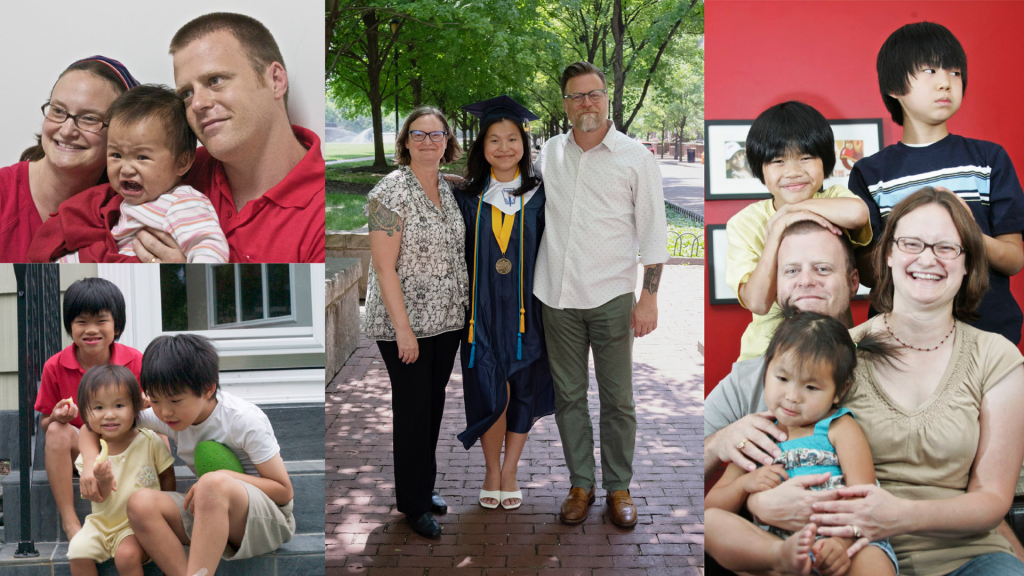
As an adoptive father of a Chinese daughter, my heart sank when I heard that China had terminated its international adoption program. The decision leaves countless orphaned children without the possibility of finding families abroad, while would-be parents who have navigated bureaucratic hurdles and invested thousands of dollars, see their dreams of parenthood shattered.
This move, while abrupt, isn’t entirely surprising. China’s rise as a global power has led to an inward turn regarding social welfare. The country is also facing concerns about a dropping birth rate. And no nation wants to send its children abroad, especially when the practice is increasingly viewed as a blemish on its national image.
But the end of adoption from China should prompt us to reflect more deeply on the broader crisis facing orphaned children — and how we, particularly in the west, are responding.
My family has been blessed through three adoptions — one domestic and two international. Each has been life-changing, deeply enriching our lives and the lives of our children. Yet as someone profoundly shaped by adoption, I am concerned that Americans, in particular, have placed too much emphasis on international adoption as a solution to the global orphan crisis.
Today, there are more than 150 million orphaned children in the world. Another child joins that heartbreaking statistic every day. Meanwhile, the number of international adoptions into the U.S. has declined significantly, peaking at 23,000 in 2004 and dropping to 1,785 in 2021. Those adoptions still offer lifelines to children, but they do not offer a viable solution to the vast and growing orphan crisis.
To put it plainly, international adoption cannot solve the global orphan crisis any more than the NBA draft can solve inner-city poverty. It is one of the most costly and least scalable of interventions. So why is it still the primary lens through which Americans view the crisis?
Our response to the needs of the world’s orphaned children must be comprehensive. We should invest in a wide range of solutions: supporting community-based care for children who can be safely placed with relatives, enhancing the quality of traditional orphanages and improving other types of residential care models.
Moreover, we must support programs that strengthen vulnerable families, ensuring access to health care, education and contraceptives to reduce early parental deaths and unintended pregnancies. These are practical and preventative measures that could significantly reduce the number of children being orphaned in the first place.
As the director of Asia’s Hope, a Christian orphan care ministry, I know front-line local leaders who are already doing this work successfully. In places like Cambodia, Thailand and India, we serve alongside individuals and local charities who, with far fewer resources than their western counterparts, are investing their limited means to care for vulnerable children in their communities. Their faithfulness and sacrifice stands as a challenge to us in wealthier nations.
Asia’s Hope is empowering these local leaders to create a uniquely effective network of family-style homes for orphaned kids in their communities. We’re mentoring other orphan care advocates who aspire to replicate our successes in places like Burundi, Kenya and Egypt.
Groups like Trauma Free World train foster parents, orphanage caregivers and policy makers to understand and accommodate the deep emotional needs of orphaned children around the world.
So no, we shouldn’t abandon international adoption. We should continue to generously fund and enthusiastically support it when necessary. However, it cannot be the only focus. Our commitment must broaden to include the millions of children who will never be adopted but who deserve to thrive.
The orphan crisis is vast, and international adoption alone cannot resolve it. By diversifying our efforts, we can begin to meet the needs of vulnerable children in ways that are sustainable, scalable and, ultimately, more just.
It is time for orphan care advocates in the west to expand our vision beyond adoption and embrace the full spectrum of solutions that orphaned and vulnerable children so desperately need.
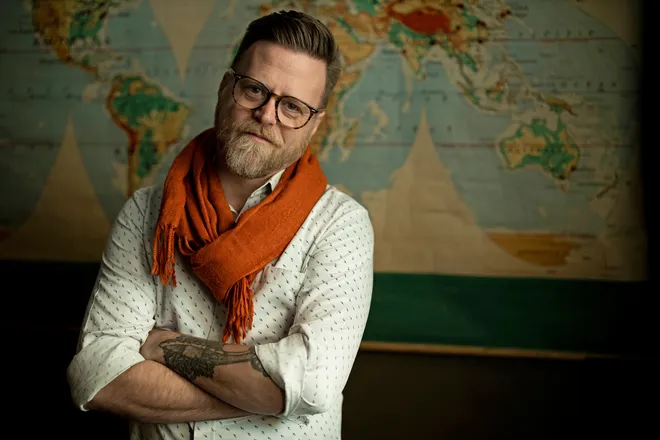
John McCollum is a co-founder and the executive director of Asia’s Hope, a Columbus, Ohio-based non-profit organization that provides family-style care for orphaned and abandoned children in Cambodia, Thailand and India. John and his wife Kori are the parents of three adult children, all of whom were adopted.